
HypnoCell®
A mind-powered framework designed to support mindset transformation, emotional awareness, relaxation, and a more intentional relationship with your body and wellbeing.
HypnoCell® combines hypnosis-inspired relaxation, visualization, focused attention, and principles associated with neuroplasticity to help people identify limiting patterns and practice healthier mental responses.
The method encourages you to become more aware of the thoughts, emotional reactions, and internal narratives that may influence your habits, stress response, and daily choices.
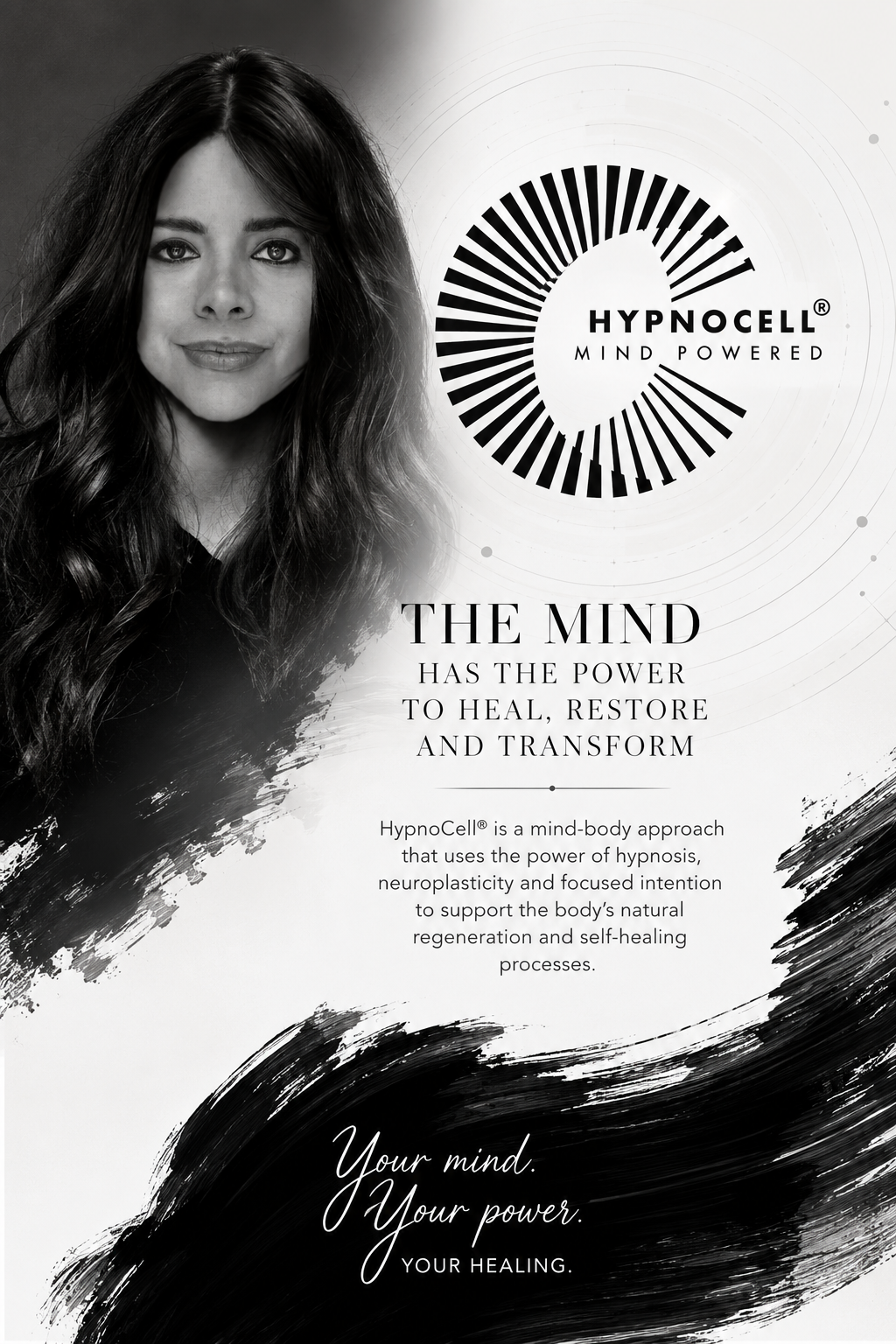

HypnoCell® was developed as a structured method for recognizing subconscious patterns, releasing emotional tension, introducing healthier perspectives, and reinforcing new responses through repetition and visualization.
Transform the Patterns That Shape Your Life
HypnoCell® focuses on three central areas that may influence behavior, emotional wellbeing, and personal growth.
Uncover Limiting Beliefs
Become more aware of subconscious beliefs, automatic thoughts, and repeated emotional reactions that may be influencing your decisions and behavior.
Release and Reframe
Use relaxation, reflection, and guided mental exercises to reduce the emotional intensity connected to old patterns and explore more constructive interpretations.
Reinforce New Responses
Practice visualization, repetition, and focused intention to help make healthier thoughts and behaviors feel more familiar and accessible over time.
How HypnoCell® Works
HypnoCell® uses a calm and focused mental state to help participants observe internal patterns with greater clarity. During this state, guided language, imagery, and repetition may make it easier to explore new perspectives and rehearse healthier responses.
The purpose is not to lose control or become unconscious. Instead, hypnosis is used as a state of concentrated attention in which the mind may become more receptive to reflection, learning, and intentional change.
Relax the nervous system
Breathing, relaxation, and focused attention help create a calmer mental environment.
Recognize the pattern
Identify thoughts, beliefs, memories, or emotional reactions that may be shaping current behavior.
Release emotional intensity
Observe the pattern without judgment and allow the emotional charge connected to it to soften.
Introduce a healthier response
Reframe the internal narrative and mentally rehearse thoughts and behaviors that support resilience and wellbeing.
Repeat and reinforce
Continue practicing the new response through visualization, repetition, and intentional daily action.
What HypnoCell® May Help You Explore
The method is intended as a personal-development and wellbeing practice. Experiences vary from person to person.
Limiting beliefs
Identify internal beliefs that may be affecting confidence, motivation, or decision-making.
Stress-related patterns
Develop greater awareness of thoughts and reactions that may keep the body in a prolonged state of tension.
Emotional regulation
Practice observing difficult emotions with more space, clarity, and self-compassion.
Behavior change
Mentally rehearse healthier choices and reinforce habits that support personal goals.
Mind–body awareness
Notice how thoughts, emotions, physical sensations, and behavioral responses may interact.
Personal resilience
Strengthen supportive internal language and develop a more intentional response to challenges.
Hypnosis, Neuroplasticity, and Focused Attention
The brain continually adapts in response to experience, learning, attention, and repetition. This capacity is often described as neuroplasticity.
HypnoCell® uses guided attention and mental rehearsal as tools for practicing alternative responses. Repetition does not guarantee transformation, but consistent practice may help new thoughts and behaviors become more familiar.
Relaxation may also make it easier for some people to notice automatic thoughts and physical stress signals before reacting to them.
Core practices may include:
- Guided relaxation and breathing
- Focused attention
- Visualization and mental imagery
- Supportive internal language
- Reframing limiting beliefs
- Repetition and mental rehearsal
- Reflection and journaling
- Intentional behavior change
Who May Find HypnoCell® Helpful?
HypnoCell® may be explored by people interested in mindset, relaxation, emotional awareness, and personal growth.
People Feeling Stuck
Those who recognize repeated patterns but have difficulty creating consistent change.
People Under Stress
Those seeking structured relaxation and greater awareness of their mental and emotional responses.
People Seeking Growth
Those interested in developing healthier internal dialogue, habits, and personal resilience.
A supportive framework—not a medical treatment
HypnoCell® is not intended to diagnose, treat, cure, or prevent disease. It does not replace medical care, psychotherapy, psychiatric treatment, medication, or advice from a qualified healthcare professional. People with significant trauma, severe mental-health symptoms, psychosis, dissociation, or complex medical conditions should consult an appropriate licensed professional before using hypnosis-based practices.
Discover the HypnoCell® Approach
Begin by recognizing the patterns that shape your thoughts, emotions, and behavior. With awareness and practice, you can create space for healthier responses and more intentional choices.